 Valley of the Kings Tour
Medinet Habu: Ramesses III's Temple on the Luxor West Bank
Medinet Habu is the mortuary temple of Ramesses III on the Luxor West Bank, and it holds reliefs of Ramesses III's battles with the Sea Peoples. This guide covers the temple, the Sea Peoples reliefs, the small Eighteenth Dynasty temple inside the enclosure, the ticket, and how a visit fits into a West Bank day. It also explains why Wikivoyage says the site gets relatively few visitors. If you want the tomb side of the West Bank, start with the Valley of the Kings tickets guide, then come back here for the temple. The bookable tours are compared on all Valley of the Kings tours.
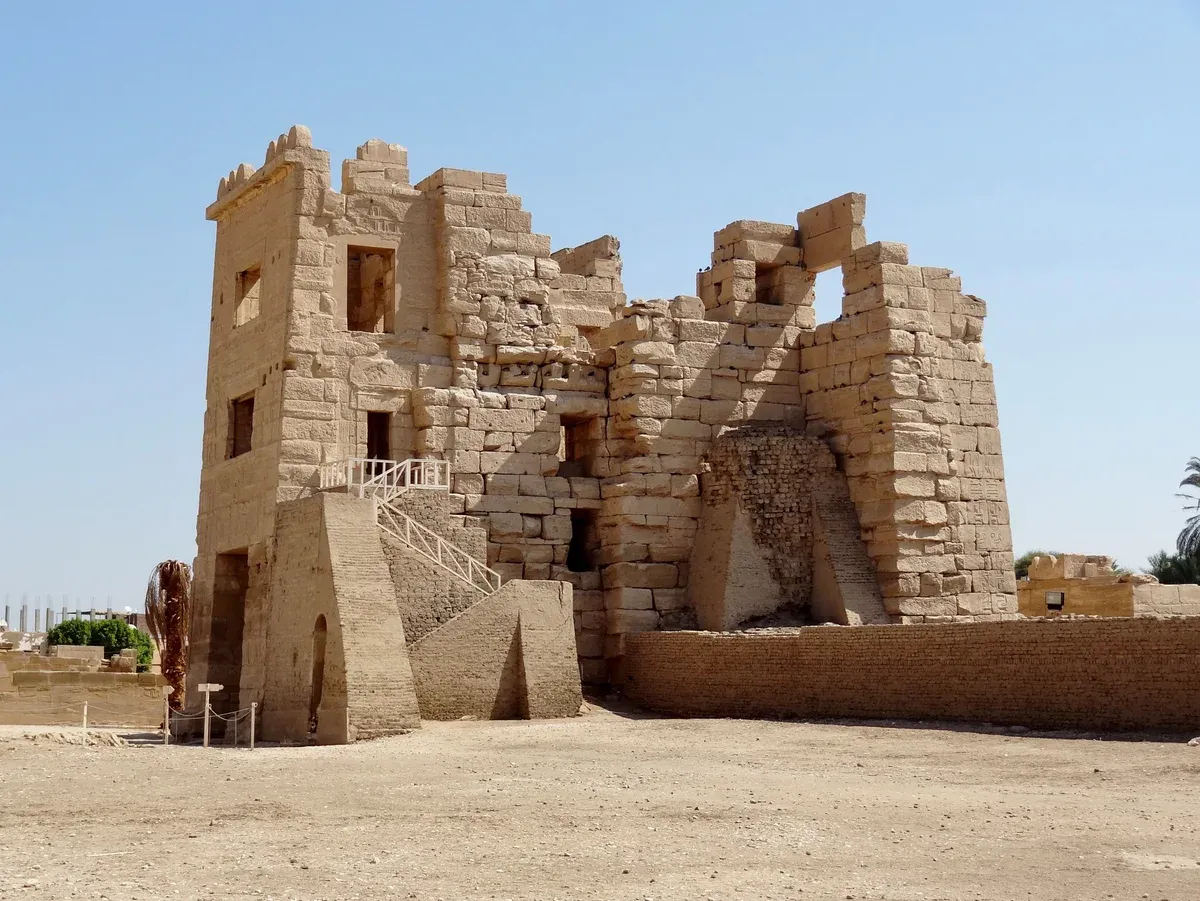
The fortified gatehouse of the Ramesses III temple at Medinet Habu. Photo: Olaf Tausch, CC BY 3.0, via Wikimedia Commons
Quick answer Medinet Habu in brief
Medinet Habu is Ramesses III's mortuary temple in Luxor, and the foreign adult ticket is 230 EGP on the Ministry figures and LE220 on Wikivoyage. The enclosure wall runs 315 by 210 metres, and the reliefs of the Sea Peoples battles are carved on the north wall. Wikivoyage describes it as a remarkable temple that gets relatively few visitors.
Key takeaways
- The foreign adult ticket is 230 EGP on the Ministry figures and LE220 on Wikivoyage. See tickets and what tours include.
- One private day covers Medinet Habu with entry included: Private West Bank, Kings and Queens, $89.24 for 8 hours.
- The Deir el-Medina workers' village sits about 960 metres away in a straight line. Pair them with the Valley of the Queens.
- For how this temple compares with the tomb tickets, check the comparison table.
Ramesses III's Temple
The temple, its courts and its enclosure come first, followed by how the site was recorded and cleared.
What You Are Looking At
Medinet Habu is the mortuary temple of Ramesses III, built in the reign of Ramesses III and dated c. 1184 to 1153 BC in one source and c. 1186 to 1155 BC in another. The formal ancient name was the Temple of Usermare-Meriamon, called United-with-Eternity, in the estate of Amon on the west of Thebes. The Egyptians knew the place as Djamet and Greek sources called it Memnonia.
The temple itself runs about 150 metres long and holds 48 rooms, with more than 7,000 square metres of decorated wall relief. The first court is lined with colossal statues of Ramesses III shown as Osiris, and the second court has columns shaped as the king.
The Gates and the Enclosure
The mudbrick enclosure wall stood 18 metres high and 10 metres thick, and the enclosed area covered 66,000 square metres. The full enclosure measures 315 by 210 metres.
The wall had fortified gates in its east and west sides. Inside, the outer court held a garden with a sacred pool measuring 20 by 18 metres. A royal palace stood beside the temple, built in two phases with a second storey added later, and its ground plan has been restored for visitors to see. The palace throne complex had an antechamber with 16 columns that served as a window of appearances.
The Small Temple of Amun
Medinet Habu is not only one temple. An older, small temple of the Eighteenth Dynasty stands at the site, dedicated to the Ogdoad, a group of eight creator gods. Hatshepsut restored it after calling it neglected. She died after finishing part of the sanctuary, and Thutmose III completed the work. Her own temple is covered on the Temple of Hatshepsut page.
The sanctuary of the small temple has six rooms, and one holds large statues of Amun and Thutmose III. Centuries later a Coptic town called Jeme grew inside the temple precinct and lasted until the 9th century. A five-aisled basilica stood in the second court. The last remnants of the Coptic town were cleared at the end of the nineteenth century, and many Greco-Roman buildings were destroyed without records.
Scholarship here runs long and deep. The University of Chicago Oriental Institute Epigraphic Survey has recorded the temple almost continuously since 1924, and Uvo Holscher's architectural survey worked five seasons until 1932, when the complex was found under mounds of rubbish 3 to 6 metres high.
Sources: Egyptian Ministry of Tourism and Antiquities, Wikipedia)
The Sea Peoples Reliefs
The north wall of Medinet Habu carries the reliefs of Ramesses III's campaigns.
Did Ramesses III Fight the Sea Peoples?
Yes, according to the temple's own record. Medinet Habu shows Ramesses III's battles with the Sea Peoples. The north wall carries 13 scenes read as one campaign running from the Libyans to the so-called Sea Peoples. Gaston Maspero first proposed that these panels showed an invasion of Egypt by Sea Peoples from Anatolia.
Two reliefs stand out. One shows Ramesses III and his troops shooting arrows at enemies in ships. Another shows feather-helmeted foes with women and children in ox carts.
For another temple stop, see Karnak Temple. On the West Bank circuit, the Colossi of Memnon are another stop.
Sources: Wikipedia), Egyptian Ministry of Tourism and Antiquities
THE BRONZE AGE COLLAPSE MONUMENT? MEDINET HABU TEMPLE - LUXOR EGYPT!
A tour of the Ramesses III mortuary temple at Medinet Habu and its battle reliefs. Third-party video by Ancient Sites Girl. This site did not shoot it and has no relationship with the creator.
Visiting Medinet Habu
The practical details are simple, and the main planning question is how to pair the temple with the tombs and the workers' village nearby.
Ticket, Hours and What Is Nearby
The figures below come from the Ministry of Tourism and Antiquities and from Wikivoyage. Where the two sources disagree, both amounts are printed so you can budget for the higher one. Opening hours and the time a visit needs are not confirmed here, so check locally on the day.
Why is Medinet Habu quieter than the tomb sites? Wikivoyage describes it as a remarkable temple that gets relatively few visitors. Of the Luxor Valley of the Kings tours compared here, only one lists Medinet Habu. The others concentrate on the tombs, the Valley of the Queens and Hatshepsut's temple. That makes it a good place to slow down, and Deir el-Medina, the tomb builders' own village about 960 metres away in a straight line, makes a natural second stop. Its workers staged what may be the first recorded sit-down strike, around 1170 BC under Ramesses III, over late grain rations, so the two sites share a king and a story.
| Item | Detail |
|---|---|
| Foreign adult ticket | 230 EGP on the Ministry figures, LE220 on Wikivoyage |
| Opening hours | Not stated |
| Time needed for a visit | Not stated |
| Getting there | On the Luxor West Bank |
| Deir el-Medina | About 960 metres away in a straight line, ticketed separately, listed at LE220 on Wikivoyage |
The Tour That Includes Medinet Habu
Only one of the tours compared here includes Medinet Habu, so check the itinerary before you book. The private day that includes it is Luxor Day Tour: Valley of Kings & Queens & Hatchepsut Temples by Reflections Travel, an 8-hour private tour from Luxor priced at $89.24 with a 4.9 rating from 1,740 reviews. Admission to the Valley of the Kings, the Valley of the Queens, Deir el-Medina, Habu Temple and Hatshepsut Temple is included. The listing does not mention a Tutankhamun tomb ticket, and lunch is not stated as included, so do not assume either. Details are on the Private West Bank, Kings and Queens page.
If you are building your own day instead, read the Valley of the Kings map first to see how the West Bank sites sit against each other, and check Medinet Habu hours locally on arrival. For the tomb that dominates most itineraries, see Tutankhamun's tomb, and for the Seti I tomb ticket see the tomb of Seti I. The full tour-to-ticket comparison lives on the homepage comparison table, one line per tour.
- Private West Bank day, 8 hours, $89.24, entry to five sites including Medinet Habu
- Free cancellation 24h, private group, pickup from the starting point
- Age bands on the listing: infant 0-2, child 3-11, adult 12-80, with infant seats available
Sources: Wikivoyage, the Reflections Travel listing
A Coptic Town Inside the Temple
For close to a thousand years after the pharaohs, Medinet Habu was not a ruin but a living town called Jeme.
Jeme and Its Basilica
A Coptic settlement named Jeme grew inside the mudbrick enclosure and lasted until the 9th century. The second court of the temple held a five-aisled basilica, so Christian worship happened under the same decorated walls that carry the Sea Peoples reliefs. The last remnants of the Coptic town were cleared at the end of the nineteenth century. That clearance destroyed a large number of Greco-Roman buildings without records, which is why the site today looks more purely pharaonic than it once was.
The names of the place shifted with its rulers. Egyptian sources knew it as Djamet, while Greek sources called it Memnonia. The ancient formal name of Ramesses III's temple was longer still: the Temple of Usermare-Meriamon, called United-with-Eternity, in the estate of Amon on the west of Thebes.
The Royal Palace Beside the Temple
A royal palace stood next to the temple within the enclosure. It was built in two phases, and the second phase added a second storey. The ground plan has been restored so visitors can read the layout today.
The throne complex had an antechamber with 16 columns that served as a window of appearances, where the king could show himself to the crowds outside. Seeing the palace, the temple and the pool side by side makes an 8-hour private circuit such as the Private West Bank, Kings and Queens day at $89.24 an efficient way to cover the site with its neighbours.
How the Temple Was Recovered
Modern knowledge of Medinet Habu comes from two long research projects, one architectural and one epigraphic.
Digging Out the Complex
Uvo Holscher's architectural survey worked five seasons until 1932. When the work began, the whole complex lay under mounds of rubbish 3 to 6 metres high, so the temple had to be dug out before it could be measured. That is one reason the enclosure reads so clearly today: the enclosed area of 66,000 square metres was only revealed once those mounds came down.
Recording Every Wall
Since 1924, the University of Chicago Oriental Institute Epigraphic Survey has recorded Medinet Habu almost continuously. The scale makes sense once you stand in front of the walls: the temple is about 150 metres long, has 48 rooms, and holds more than 7,000 square metres of decorated relief. Nearly a century of documentation means almost every scene you photograph has been studied and drawn.
To plan a visit around the wider West Bank, start from the Valley of the Kings tours homepage, and if you want a half-day option that pairs the big tombs with temple time, the West Bank Half Day with Lunch is a shared 5-hour tour at $23.
Medinet Habu Questions
Can you visit Medinet Habu?
Yes. It is an open ticketed site on the Luxor West Bank, with a foreign adult ticket of 230 EGP on the Ministry figures and LE220 on Wikivoyage. You can visit on your own or on a guided day, and the private itinerary that includes it is described on the Private West Bank, Kings and Queens page.
Did Ramesses III fight the Sea Peoples?
The temple record says so. Medinet Habu shows his battles with the Sea Peoples, with a north wall of 13 scenes read as one campaign from the Libyans to the Sea Peoples, including a naval scene where the king shoots arrows at enemies in ships. Gaston Maspero first read the panels as an invasion from Anatolia.
How much is the Medinet Habu ticket?
The Ministry figure is 230 EGP for foreign adults, while Wikivoyage lists LE220, so budget for the higher amount. Ticket prices are a recurring theme across the West Bank, and the Valley of the Kings tickets guide explains how the tomb tickets work on the same trip.
Is Medinet Habu worth visiting?
It depends on what you want from the West Bank. If you care about relief carving rather than tombs, it holds more than 7,000 square metres of decorated wall and Wikivoyage calls it a remarkable temple that gets relatively few visitors. Pair it with Temple of Hatshepsut to compare a terraced temple with a walled one.
What is near Medinet Habu?
Deir el-Medina, the tomb builders' village of Set Maat, the Place of Truth, sits about 960 metres away in a straight line, with about 68 houses in its final form and thousands of ostraca found there. Its ticket is listed at LE220 on Wikivoyage, separate from the Medinet Habu ticket. For the full West Bank picture, see the Valley of the Kings map.